- sisdoz@sisdoz.com.tr
- TR

Blog
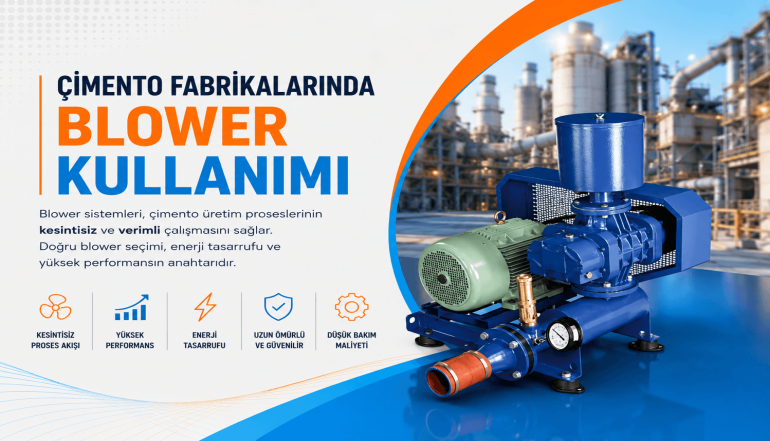
Blower Usage in Cement Factories
Cement production is one of the most demanding heavy industrial processes, operating continuously at high capacity. Controlled and uninterrupted airflow is required throughout many production stages, including raw material transportation, clinker production, silo ventilation, and dust filtration. In these applications, blower systems play a vital role in ensuring stable and efficient plant operation.
Incorrectly sized or poorly maintained blower systems can increase energy consumption, reduce process efficiency, and lead to costly unplanned shutdowns. For this reason, blower selection in cement factories involves much more than supplying compressed air. Operating pressure, airflow requirements, energy efficiency, maintenance costs, and process conditions must all be evaluated together.
In this article, we explain where blowers are used in cement plants, why selecting the right blower is important, and the operational advantages they provide.
What Is a Blower?
A blower is an industrial air-moving machine that increases atmospheric air to a specific pressure level before delivering it to industrial processes. By providing a continuous and stable airflow, blowers perform critical functions in a wide range of industries, including pneumatic conveying, ventilation, dust collection, biological treatment, and air transfer applications.
Blower systems are manufactured using different technologies depending on airflow requirements, operating pressure, and process conditions. The most common types include Roots blowers, screw blowers, and turbo blowers.
In cement plants, blowers are used throughout the production process, including pneumatic conveying systems, silo aeration, bag filters, and combustion air supply. A properly sized and regularly maintained blower system helps improve process efficiency, optimize energy consumption, and maintain uninterrupted production.
For more information about blower operating principles, applications, blower types, and selection criteria, you can read our article titled "What Is a Blower?".
Where Are Blowers Used in Cement Factories?
1. Pneumatic Material Conveying Systems
Cement, fly ash, limestone powder, and other fine materials are commonly transported using pneumatic conveying systems. Blowers generate the airflow required to move these materials safely and efficiently through pipelines.
Key benefits include:
- Reduced manual handling
- Lower dust generation
- Faster production processes
- Improved labor productivity
- Reduced material losses
2. Silo Aeration Systems
Materials stored inside cement silos may compact over time, reducing flowability. Controlled airflow supplied by blower systems helps maintain material consistency and improves discharge performance.
This provides several advantages:
- Reduced risk of material bridging
- Easier silo discharge
- More consistent material flow
- Reduced production interruptions
3. Bag Filter and Dust Collection Systems
Cement manufacturing generates significant amounts of fine dust. Efficient dust collection systems are essential for environmental compliance and workplace safety.
Blower systems help by:
- Improving filter efficiency
- Reducing dust emissions
- Supporting filter cleaning cycles
- Creating a safer working environment
4. Rotary Kiln Combustion Air Supply
Clinker production is one of the most critical stages of cement manufacturing. Rotary kilns require precisely controlled combustion air for efficient operation.
Blower systems can:
- Improve combustion efficiency
- Optimize fuel consumption
- Stabilize kiln operation
- Support consistent product quality
5. Wastewater Treatment Systems
Modern cement plants often include biological wastewater treatment facilities where blower systems supply oxygen for aeration.
Adequate oxygen transfer helps:
- Improve microorganism activity
- Increase treatment efficiency
- Support compliance with environmental regulations
Why Is Proper Blower Selection Important?
Every cement plant has unique production capacities, operating conditions, and process requirements. Therefore, blower selection should be based on detailed engineering calculations rather than standard equipment specifications.
The primary selection criteria include:
- Required airflow capacity
- Operating pressure
- Daily operating hours
- Ambient temperature
- Dust concentration
- Energy efficiency
- Noise level
- Ease of maintenance
- Availability of service and spare parts
A properly engineered blower system contributes to longer equipment life while reducing operating costs.
The Importance of Blower Systems for Energy Efficiency
Energy consumption represents one of the largest operating expenses in cement manufacturing. Selecting the appropriate blower and performing regular maintenance can significantly reduce energy usage.
To improve energy efficiency:
- Select the correct blower capacity.
- Use a Variable Frequency Drive (VFD).
- Inspect air leaks regularly.
- Clean filters at scheduled intervals.
- Perform routine preventive maintenance.
- Calculate operating pressure accurately.
These practices enable blower systems to deliver higher performance while consuming less energy.
Why Is Regular Blower Maintenance Important?
Cement plants operate in extremely dusty environments, exposing blower systems to demanding operating conditions.
Without regular maintenance, the following issues may occur:
- Bearing wear
- Loose or worn belts
- Clogged filters
- Higher motor temperatures
- Reduced airflow
- Increased energy consumption
Routine maintenance extends equipment life while helping prevent costly unplanned shutdowns.
Advantages of Using Blowers in Cement Factories
Properly selected and well-maintained blower systems provide numerous operational benefits.
- Supports continuous production
- Improves pneumatic conveying efficiency
- Enhances dust control
- Optimizes energy consumption
- Improves filter system performance
- Helps reduce operating costs
- May reduce maintenance requirements
- Supports environmental compliance
- Provides reliable long-term operation
Frequently Asked Questions
Where are blowers most commonly used in cement factories?
Blowers are widely used in pneumatic conveying systems, silo aeration, bag filter systems, rotary kiln combustion air supply, and wastewater treatment facilities.
Can blower systems help save energy?
Yes. Correctly sized blower systems equipped with high-efficiency motors and maintained regularly can significantly improve overall energy efficiency.
Which type of blower is best for cement plants?
Depending on the application, Roots blowers, screw blowers, or turbo blowers may be the most suitable choice. Selection should always be based on airflow requirements, operating pressure, and process conditions.
What should be included in routine blower maintenance?
Routine maintenance should include filter cleaning, bearing inspection, oil level checks, belt tension adjustment, vibration monitoring, and air leak inspection.
Conclusion
Blower systems in cement factories are essential for maintaining efficient, reliable, and uninterrupted production. Whether used in pneumatic conveying, silo aeration, dust collection, rotary kiln combustion, or wastewater treatment, properly selected blower systems can significantly improve plant performance.
However, selecting the right blower alone is not enough. Proper engineering, accurate capacity calculations, and regular preventive maintenance are equally important for maximizing system efficiency.
When investing in blower systems for cement plants, companies should evaluate not only the initial purchase cost but also long-term energy consumption, maintenance expenses, equipment reliability, and overall operational performance.