- sisdoz@sisdoz.com.tr
- TR
Blog
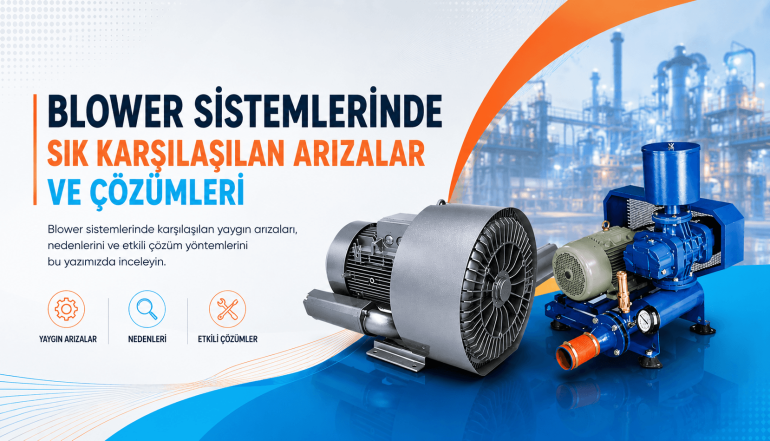
Common Failures and Solutions in Blower Systems
Blower systems are among the critical equipment used in many different areas, from wastewater treatment plants to pneumatic conveying lines, from industrial production facilities to ventilation applications. Designed for continuous operation, blowers are of great importance in ensuring process continuity for businesses. However, various failures can occur due to long-term use, insufficient maintenance, or incorrect operating conditions.
Blower failures not only reduce the performance of the equipment but can also increase energy consumption, cause unplanned downtime, and increase maintenance costs. Therefore, early detection of potential problems and the application of correct intervention methods are extremely important.
In this article, we will discuss the most common failures in blower systems, their causes, and possible solutions in detail.
The Importance of Faults in Blower Systems
In many businesses, blowers operate continuously for a large part of the day or 24 hours a day. This intense work pace can cause wear and tear on mechanical and electrical components over time.
In blower systems that are not regularly maintained:
- Energy consumption may increase,
- Air flow may decrease,
- Pressure losses may occur,
- Equipment life may be shortened,
- Unexpected production stoppages may occur.
Therefore, regularly monitoring the performance of blower systems is of great importance.
1. Overheating Problem
One of the most common problems in blower systems is overheating.
Possible Causes
- Clogged air filters
- Insufficient ventilation
- Operation under overload
- Lack of lubrication
- High ambient temperature
When the blower exceeds its normal operating temperature, serious damage can occur to the motor and bearing components.
Suggested Solutions
- Regularly clean or replace air filters.
- Ensure adequate air circulation in the blower chamber.
- Check motor current values.
- Periodically monitor oil levels.
- Ensure the ambient temperature complies with manufacturer recommendations.
2. Low Airflow Problem
If sufficient airflow is not provided in the system despite the blower operating, a performance loss may occur.
Possible Causes
- Filter blockages
- Leaks in the suction line
- Pipeline contamination
- Rotor wear
- Incorrect speed adjustment
Especially in wastewater treatment plants, low airflow can directly affect the efficiency of biological processes.
Suggested Solutions
- Check filters.
- Perform leak tests on pipe connections.
- Clean suction and discharge lines.
- Measure rotor clearances.
- Check frequency inverter settings.
3. Abnormal Noise and Vibration
In blower systems, noise levels above the normal operating level may indicate an impending malfunction.
Possible Causes
- Bearing failures
- Rotor imbalance
- Loose connections
- Coupling misalignment
- Foreign object ingress
If noise and vibration are not addressed promptly, they can lead to more serious mechanical damage.
Suggested Solutions
- Check all connecting elements for tightness.
- Re-adjust the coupling settings.
- Examine the bearing condition.
- Perform a rotor balance measurement.
- Check for foreign objects in the air inlet.
4. Motor Constantly Switching to Protection
Frequent protection switching of the electric motor is a common problem encountered in blower systems.
Possible Causes
- Phase imbalance
- Low or high voltage
- Mechanical jamming
- High operating pressure
- Motor winding problems
Suggested Solutions
- Measure the mains voltage.
- Monitor the motor current values.
- Check the pressure levels.
- Examine bearing and rotor friction.
- Have a motor insulation test performed if necessary.
5. Oil Leaks
Oil leaks can sometimes occur in oil-filled blower systems.
Possible Causes
- Gasket wear
- Seal deformations
- Excessive oil filling
- High pressure
Oil leaks not only cause oil loss, but can also create environmental risks and equipment damage.
Suggested Solutions
- Replace gaskets and seals periodically.
- Follow the oil level recommended by the manufacturer.
- Regularly check pressure values.
- Detect leak points early.
6. Low Pressure Problems
In some cases, the blower may not reach the desired pressure level.
Possible Causes
- Line leaks
- Worn rotors
- Clogged filters
- Incorrect valve settings
- Incorrect selection of system capacity
Suggested Solutions
- Perform a leak test.
- Clean the filters.
- Check valve positions.
- Measure rotor wear.
- Evaluate the suitability of the system capacity for the process.
7. Bearing Failures
Bearings are one of the most critical parts of blower systems.
Possible Causes
- Incorrect lubrication
- Dirty working environment
- Overload
- Alignment problems
Faulty bearings can cause greater damage to the rotor and motor over time.
Suggested Solutions
- Create a regular lubrication plan.
- Have vibration analyses performed.
- Monitor bearing temperatures.
- Keep periodic maintenance records.
The Most Effective Way to Prevent Blower Failures: Periodic Maintenance
Many blower failures can actually be prevented with regular maintenance practices. Thanks to planned maintenance programs, the performance of the equipment is maintained while operating costs are kept under control.
Periodic maintenance includes:
- Filter checks,
- Oil changes,
- Bearing inspections,
- Vibration measurements,
- Motor current analyses,
- Leakage checks
should be performed regularly.
Failures occurring in blower systems can turn into serious problems that can directly affect production processes. Early diagnosis of problems such as overheating, low airflow, vibration, pressure loss, or bearing failures both extends the life of the equipment and reduces operating costs. Thanks to regular maintenance, correct capacity selection, and professional service support, blower systems can continue to operate with high efficiency for many years.