- sisdoz@sisdoz.com.tr
- TR

Blog
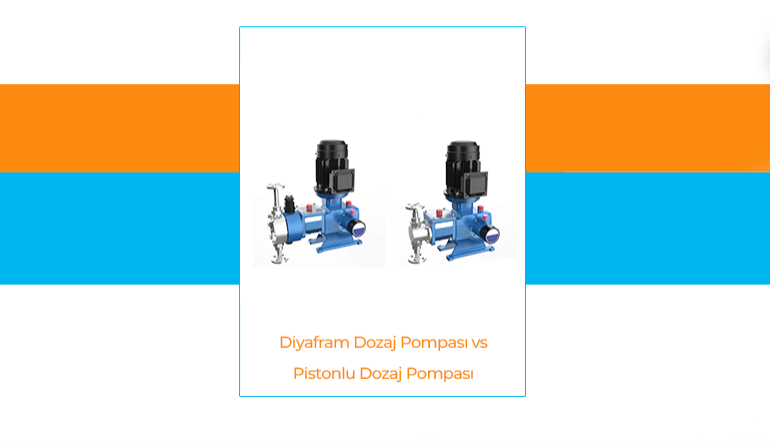
Diaphragm Dosing Pump vs. Piston Dosing Pump
In industrial processes, delivering chemicals to the system in the correct amount, in a controlled and safe manner, is a critical issue. From water treatment plants to the chemical industry, from food production to power plants, dosing directly affects process quality in many areas. At this point, dosing pumps are among the most commonly used pieces of equipment.
Dosing pumps vary according to their different operating principles. The two most common options among these are diaphragm dosing pumps and piston dosing pumps. Both pump types are used to pump a specific amount of liquid in a controlled manner. However, there are significant differences between them in terms of their operating structures, areas of use, maintenance needs, and chemical compatibility.
Therefore, the answer to the question "diaphragm dosing pump or piston dosing pump?" should be evaluated not only according to the pump type but also according to the chemical to be used, system pressure, flow rate requirement, precision expectation, and operating conditions.
What is a Dosing Pump?
A dosing pump is a special type of pump that enables the transfer of liquid chemicals into a system with a specific flow rate and precision. Unlike standard transfer pumps, the primary purpose of dosing pumps is not to transport large quantities of liquid, but to deliver a predetermined amount to the system in a controlled manner.
These pumps are generally used for dosing chemicals such as acids, caustic soda, chlorine, antiscalants, polymers, coagulants, disinfectants, pH regulators, and similar chemicals. If the dosing process is done incorrectly, product quality may deteriorate, equipment may be damaged, or process efficiency may decrease. Therefore, choosing the right pump is of great importance for system safety.
What is a Diaphragm Dosing Pump?
A diaphragm dosing pump is a type of pump that uses a flexible diaphragm to move the liquid. The diaphragm inside the pump moves back and forth, performing the suction and discharge operations. In this structure, the chemical liquid does not come into direct contact with the mechanical parts.
Thanks to the diaphragm structure, the pump offers a safe solution, especially in the dosing of corrosive and aggressive chemicals. Diaphragm dosing pumps are commonly preferred for acids, bases, disinfectants, and sensitive chemicals. The fact that the chemical does not come into contact with the pump mechanism provides a significant advantage in terms of sealing and safety.
Diaphragm dosing pumps are frequently used in water treatment systems, wastewater treatment plants, pool disinfection, industrial chemical dosing, pH control, and process chemical applications.
What is a Piston Dosing Pump?
A piston dosing pump is a type of pump that uses a piston mechanism to move liquid. Liquid is drawn in and sent into the system under pressure as the piston moves back and forth inside the cylinder.
This type of pump offers powerful performance, especially in applications requiring high pressure. Piston dosing pumps are preferred in processes requiring high precision and stable flow rate control. Because their mechanical structure is stronger, they can provide effective results in challenging operating conditions.
However, in piston pumps, the areas in contact with the chemical and the sealing elements must be evaluated more carefully. If the liquid to be used is corrosive, crystallizing, or particulate, material selection and maintenance plan become even more critical.
Key Differences Between Diaphragm and Piston Dosing Pumps
The most fundamental difference between diaphragm and piston dosing pumps is the method of moving the liquid. In diaphragm pumps, the liquid is pushed through a flexible diaphragm, while in piston pumps, this process is accomplished by the movement of a piston.
In diaphragm dosing pumps, there is a physical separation between the chemical and mechanical components. This allows the pump to operate more safely with aggressive chemicals. In piston dosing pumps, since the mechanical force is provided directly by the piston movement, stronger performance can be achieved in high-pressure applications.
Another important difference is the maintenance requirement. Diaphragm pumps generally stand out with their lower maintenance requirements. Piston pumps, although offering high performance, may require more regular checks in terms of seals, gaskets, and sealing elements.
Advantages of Diaphragm Dosing Pumps
One of the most important advantages of diaphragm dosing pumps is chemical safety. Thanks to the diaphragm structure, the liquid being dosed does not come into direct contact with the mechanical part of the pump. This ensures safe operation, especially in processes where corrosive and hazardous chemicals are used.
Leak-proof performance is one of the important reasons for choosing diaphragm pumps. Reducing the risk of leakage in areas where acids, chlorine, caustic soda, and similar chemicals are used is important for both occupational safety and equipment life.
Diaphragm dosing pumps are also systems that allow for precise flow rate adjustment. They can adapt to different process needs with analog or digital control options. Thanks to models that can be integrated into automation systems, dosing can be done based on pH, ORP, or conductivity values.
Advantages of Piston Dosing Pumps
The strongest aspect of piston dosing pumps is their ability to operate stably under high pressure. Therefore, piston systems may be more suitable in processes where pressure values are high. These pumps can provide high-precision dosing with the right material and design selection.
They offer effective results, especially in applications where a specific amount of liquid needs to be delivered to the system under high pressure. Piston dosing pumps are preferred in heavy industrial processes due to their robust mechanical structure. Chemical plants, power plants, boiler chemical dosing systems, and high-pressure lines are among the areas where these pumps are used.
Which Pump is Safer?
When evaluating safety, the properties of the chemical to be dosed must be considered. When dealing with corrosive, toxic, volatile, or hazardous chemicals, diaphragm dosing pumps are generally a safer option. This is because the diaphragm structure prevents the liquid from reaching the mechanical part and reduces the risk of leakage.
Piston dosing pumps can also operate safely with the right material selection and regular maintenance. However, the condition of the sealing elements is more critical in these pumps. If seal or packing wear is not monitored, a risk of leakage may occur.
Therefore, while diaphragm structures are considered more advantageous in safety-prioritized applications, piston dosing pumps can be considered in applications requiring high pressure and strong mechanical performance.
Which Pump Provides More Precise Dosing?
Both pump types can provide precise dosing when selected correctly. However, operating conditions are decisive at this point.
Diaphragm dosing pumps provide precise control, especially in low and medium flow rate chemical dosing applications. In digitally controlled models, the dosage amount can be adjusted more easily, and automatic dosing can be performed according to process values.
Piston dosing pumps can offer stable and powerful dosing performance under high pressure. Therefore, they can provide an advantage in high-pressure lines and processes requiring stable flow rates.
In evaluating accuracy, not only the pump type but also the stroke setting, motor control, valve structure, fluid properties, and system pressure should be considered.
Which is More Advantageous in Terms of Maintenance?
Diaphragm dosing pumps are generally more advantageous in terms of ease of maintenance. Because the diaphragm structure prevents the chemical from reaching the mechanical part, the internal components of the pump operate more safely. This can reduce the need for maintenance in the long run.
In piston dosing pumps, parts such as the piston, seal, and packing need to be checked regularly. In high-pressure operations, these parts can wear out over time. Therefore, the periodic maintenance plan for piston pumps needs to be implemented more carefully.
However, piston dosing pumps that are correctly selected and regularly maintained can also operate efficiently and for a long time. The important thing here is to select the pump according to the process conditions and not to neglect the maintenance processes.
Chemical Compatibility Assessment
One of the most important criteria in dosing pump selection is chemical compatibility. It must be evaluated whether the liquid to be used is acidic, basic, viscous, corrosive, crystallizing, or particulate.
Diaphragm dosing pumps have a wide range of applications in terms of chemical resistance. When the pump head, diaphragm, valve, and connection materials are correctly selected, aggressive chemicals can be dosed safely.
In piston dosing pumps, the material of the parts in contact with the liquid becomes more critical. Especially with corrosive and crystallizing chemicals, the durability of the piston and sealing elements must be carefully examined.
Therefore, the chemical's safety data sheet, temperature, density, viscosity, and process conditions must be considered when selecting a pump.
Pump Selection According to Application Areas
Diaphragm dosing pumps are generally preferred in water treatment plants, wastewater treatment systems, pool applications, pH control systems, disinfection processes, and general chemical dosing applications.
Piston dosing pumps are mostly used in industrial processes requiring high pressure, boiler chemical dosing systems, power plants, petrochemical applications, and heavy-duty conditions.
If hazardous and corrosive chemicals are to be dosed at low or medium pressure in the system, a diaphragm dosing pump may be more suitable. If high pressure, strong mechanical performance, and stable flow rate are prioritized, a piston dosing pump may be the more appropriate choice.
Diaphragm Dosing Pump or Piston Dosing Pump?
There is no single answer to this question. The right choice should be made according to the needs of the process.
If chemical safety, leak-proofness, low maintenance requirements, and automation compatibility are prioritized, a diaphragm dosing pump is more advantageous. Diaphragm systems are widely used, especially in water treatment, disinfection, and pH control applications.
If high pressure, viscous fluid dosing, strong mechanical structure, and heavy industrial performance are required, a piston dosing pump can be preferred. These pumps offer effective solutions for high-pressure dosing, especially in challenging process conditions.
Incorrect pump selection can lead to problems such as chemical leakage, irregular dosing, equipment failure, high maintenance costs, and process inefficiency. Therefore, not only the pump type but also all system conditions should be evaluated together when making a selection.
Diaphragm dosing pumps and piston dosing pumps are two important pump types that offer different advantages in industrial dosing applications. Diaphragm pumps offer safe, leak-proof, and chemically resistant solutions, while piston pumps excel in high-pressure and powerful dosing needs.
For the correct pump selection, the properties of the chemical to be dosed, system pressure, flow rate requirement, accuracy expectation, maintenance conditions, and operational safety should be evaluated together. Since the needs of each process are different, the most efficient result is obtained with application-specific pump selection.
To ensure safe and efficient chemical dosing in industrial facilities, pump selection should be considered a technical decision and should not be based solely on price or general usage habits. A correctly selected dosing pump both improves process quality and contributes to keeping operating costs under control in the long term.