- sisdoz@sisdoz.com.tr
- TR

Blog
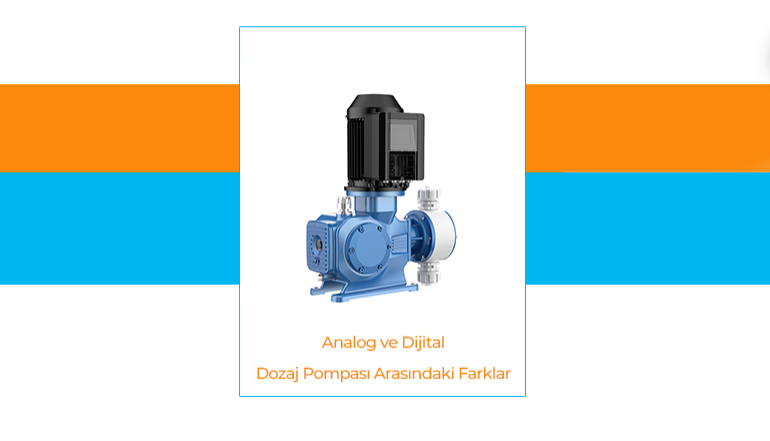
Differences Between Analog and Digital Dosing Pumps
Dosing pumps are one of the most important pieces of equipment used in industrial facilities to ensure efficient, safe, and controlled chemical dosing processes. Preferred in many different fields, from water treatment systems to chemical plants, food production to the pharmaceutical industry, these pumps enable the transfer of liquid chemicals into the system in specific quantities. However, when choosing a dosing pump, not only flow rate or pressure values but also the control structure is of great importance. The most fundamental difference encountered at this point is between analog and digital dosing pumps.
For many businesses, choosing the right pump doesn't just mean investing in equipment. It's also a critical decision in terms of process quality, chemical consumption, maintenance needs, and operational efficiency. Although analog and digital dosing pumps perform similar basic functions, they differ significantly in terms of ease of use, adjustment accuracy, automation compatibility, and control capabilities.
In this article, we will discuss the differences between analog and digital dosing pumps in detail and explain which system is more suitable for which application.
What is a Dosing Pump and Why is it Important?
A dosing pump is a special type of pump that enables the controlled and continuous delivery of a specific amount of liquid into a system. It is widely used in systems where precise dosing of chemicals such as acids, bases, chlorine, coagulants, flocculants, and similar substances is required. Accurate dosing ensures process stability, product quality preservation, and controlled chemical consumption.
An incorrectly selected pump or one with insufficient control capabilities can lead to excessive chemical use, process fluctuations, and reduced equipment performance. Therefore, not only the mechanical structure but also the control type of the pump should be carefully evaluated.
What is an Analog Dosing Pump?
An analog dosing pump is a type of pump that generally operates on a manual adjustment principle and meets basic dosing needs. The stroke length or stroke frequency is adjusted using physical adjustment knobs or potentiometers on these pumps. The user manually determines the pump's operating level, and the system continues to operate based on this fixed setting.
Analog dosing pumps have a simpler control logic. Their operating structures are generally simpler, and they are preferred in applications that do not require advanced automation. In small and medium-sized systems, they may be sufficient to meet basic dosing needs.
What is a Digital Dosing Pump?
A digital dosing pump, on the other hand, is a type of pump with an electronic control infrastructure, offering more precise adjustment possibilities and designed for advanced process management. These pumps are generally equipped with a control panel with a display, digital display, alarm system, and various communication options. Flow rate adjustment can be done much more precisely, and system parameters can be easily managed via a digital interface.
Digital dosing pumps are particularly prominent in facilities requiring automation integration. They can work in conjunction with PLCs, sensors, pH meters, conductivity meters, or level control systems. Thus, the pump can be operated dynamically according to the measured data, not just at a fixed setting.
Key Differences Between Analog and Digital Dosing Pumps
Although the differences between analog and digital dosing pumps may seem to be only at the control panel level at first glance, in reality this distinction is significant enough to directly affect operational performance.
Control Accuracy
Analog pumps operate within a specific setting range, and settings are mostly made based on user experience. Therefore, small deviations may occur in applications requiring very precise dosing.
Digital pumps, on the other hand, offer more precise and measurable setting possibilities. Flow rates can be entered numerically, precise adjustments can be made, and the same result can be obtained more easily in repetitive applications. This accuracy provides a great advantage, especially in processes where chemical balance is critical.
Ease of Use
Analog pumps may be considered practical by some users due to their simple design. However, physically making adjustments can be time-consuming, especially in situations requiring precise dosing.
Digital pumps, on the other hand, offer a more user-friendly experience thanks to their screen interfaces. The visibility of setting values facilitates parameter monitoring. In addition, error warnings and alarm notifications allow for faster operator intervention.
Automation-Compatible Operation
Analog dosing pumps mostly operate independently and are predominantly manual. Integration possibilities with automation systems may be limited.
Digital dosing pumps, however, are much more compatible with modern industrial automation systems. They can be controlled with external signals, perform dosing according to sensor data, and can be integrated into a central control system. Digital models become much more functional, especially in smart plant infrastructures.
Monitoring and Safety Features
Analog pumps generally have a basic operating logic and limited feedback options. It may not always be easy to see which setting the pump is operating in or whether an error has occurred.
Digital pumps, on the other hand, can offer advanced features such as alarms, error reporting, dry-running warning, level control support, and data logging in some models. This provides significant advantages in terms of both equipment safety and process continuity.
Cost Difference
Analog dosing pumps are generally more economical in terms of initial investment cost. Therefore, they may be preferred in low-budget or basic needs applications.
Digital dosing pumps, on the other hand, may require a higher initial investment. However, thanks to precise dosing, low chemical waste, fewer operator errors, and improved control advantages, they can provide a cost advantage in the long run.
In Which Applications Are Analog Dosing Pumps Preferred?
Analog dosing pumps are generally used in applications where simpler and constant chemical dosing is required. They can provide sufficient performance in systems that operate continuously under the same conditions and do not require precise process monitoring.
They are particularly preferred in the following areas:
- Small-scale water treatment systems
- Simple chlorination applications
- Facilities with low automation requirements
- Constant flow chemical dosing lines
- Businesses seeking an economical solution
In these types of applications, an analog pump can be a practical and cost-effective solution.
In Which Applications Are Digital Dosing Pumps More Advantageous?
Digital dosing pumps stand out in systems where precision and control capabilities are paramount. Digital systems are a better choice in situations where chemical consumption needs to be optimized, automatic control is required, and process data needs to be better managed.
Areas where they excel include:
- pH control systems
- Advanced water and wastewater treatment plants
- Food and pharmaceutical production lines
- Chemical process control applications
- Systems requiring PLC and sensor integration
- Processes requiring variable flow rates
In such areas, the use of digital pumps means not only better dosing but also more stable operational management.
What Should Be Considered When Choosing a Pump?
When choosing an analog or digital dosing pump, simply comparing prices is not enough. A technical evaluation of the process needs is necessary for the correct selection.
The main factors to consider when choosing a pump are:
- Type of chemical to be dosed
- Daily or hourly dosing requirement
- Line pressure and system flow rate
- Manual or automatic control requirement
- Need for integration with measuring devices
- The maintenance and usage habits of the company
- Long-term operating cost
While an analog pump may suffice for some businesses, not using a digital pump in some processes may lead to higher costs in the future. Therefore, the selection must be application-based.
How to Determine the Right Choice for Businesses?
If your system operates under stable conditions, your dosage needs are clear, and manual control is sufficient, an analog dosing pump may be the right choice. However, if precision is important in your process, you want to optimize chemical usage, and you have an automation infrastructure, a digital dosing pump will offer a more efficient solution.
Digital systems provide stronger advantages, especially for businesses aiming for growth, wanting to standardize production quality, and aiming to minimize human error. Although the initial investment cost is higher, the control advantage it offers in the medium and long term can compensate for this difference.
Conclusion
The differences between analog and digital dosing pumps are not limited only to their usage. These two systems differ in many areas such as precision, automation compatibility, safety, process monitoring, and long-term operational performance.
Analog pumps offer simpler and more economical solutions, while digital pumps provide smarter, more precise, and controlled dosing.
The correct pump selection should be determined according to the operating structure of the system and the needs of the business. Therefore, it is of great importance to analyze the process in detail before making an investment decision and to choose the most suitable solution for the application. A correctly chosen dosing pump improves chemical management and supports long-term operational efficiency.