- sisdoz@sisdoz.com.tr
- TR

Blog
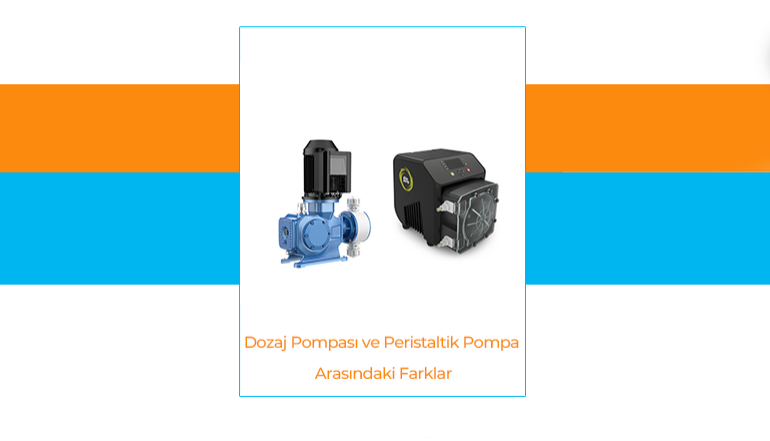
Differences Between Dosing Pumps and Peristaltic Pumps
In industrial facilities, the controlled transfer of liquids is of great importance in terms of process safety and production quality. Especially in chemical dosing, water treatment, food production, laboratory applications, and hygienic processes, the type of pump used directly affects the efficiency of the system. At this point, two of the most frequently compared pieces of equipment are dosing pumps and peristaltic pumps.
Although both pump types are used for liquid transfer, their operating principles, purposes of use, sensitivity levels, maintenance needs, and chemical compatibility differ. Therefore, in order to give a clear answer to the question "dosing pump or peristaltic pump?", it is necessary to first correctly analyze the technical needs of the application.
What is a Dosing Pump?
A dosing pump is a special type of pump that enables the controlled and precise delivery of a specific amount of liquid chemicals into the system. Unlike standard transfer pumps, these pumps are used not for transporting high volumes of liquid, but for regularly dosing a specified amount of fluid. Dosing pumps are generally preferred for the controlled delivery of acids, caustic soda, chlorine, antiscalants, coagulants, polymers, disinfectants, pH regulators, and process chemicals into systems. Water treatment plants, wastewater treatment systems, pool applications, chemical plants, power plants, and industrial production lines are common areas of use for dosing pumps.
Dosing pumps can be manufactured in diaphragm, piston, electromagnetic, or motor-driven configurations. When making a selection, flow rate requirements, pressure values, chemical composition, automation requirements, and precision expectations should be considered.
What is a Peristaltic Pump?
A peristaltic pump is a type of pump that transfers liquid through a flexible hose or tube by means of compression. Rollers or coils inside the pump compress the hose at specific intervals, causing the liquid to move forward. This working principle is similar to the peristaltic movement in the human body.
In peristaltic pumps, the liquid only comes into contact with the inner surface of the hose. The mechanical parts of the pump do not come into direct contact with the fluid. This feature provides a significant advantage, especially for hygienic applications, sensitive liquids, fluids with particles, and processes where the risk of contamination must be prevented.
These pumps can be used in laboratory systems, food and beverage production, medical applications, dosing processes, sludge transfer, transfer of viscous liquids, and controlled transport of corrosive chemicals.
Differences in Working Principle
Dosing pumps operate with diaphragm, piston, or electromagnetic movement depending on the selected pump type. The main purpose is to deliver the liquid to the system in a controlled manner at a specified flow rate and pressure. In conventional pumps, the pump body, check valves, diaphragm, or piston mechanism draws and pumps fluid.
In peristaltic pumps, however, the fluid passes through a hose, not the pump body. Rollers compress the hose, and this compression propels the fluid forward. The fact that the fluid only contacts the hose is the most distinctive feature that sets peristaltic pumps apart from other pump types.
Therefore, while dosing pumps are preferred for controlled chemical supply, peristaltic pumps can be used for both dosing and hygienic or precise fluid transfer.
Comparison in Terms of Accuracy
Dosing pumps are specifically designed for precise chemical dosing. Thanks to flow rate adjustment, stroke control, motor speed, and automation connections, they ensure the consistent delivery of a specific amount of chemical to the system. They offer high control, especially in pH control, chlorine dosing, antiscalant applications, and process chemical feeding.
Peristaltic pumps can also perform precise dosing. However, hose structure, loss of elasticity, operating time, and pressure conditions can affect dosing accuracy. They can yield successful results, especially in low-flow applications; however, hose wear should be monitored in long-term operation. In general, dosing pumps are more commonly preferred in high-precision and continuous chemical dosing applications. In sensitive processes where the liquid must not be contaminated, peristaltic pumps come to the forefront.
Differences in Terms of Chemical Compatibility
Chemical compatibility is a critical issue in dosing pump selection. The pump head, diaphragm, valve, seal, and connection materials must be suitable for the chemical to be used. If the correct materials are not selected for acids, bases, oxidizing chemicals, or solvents, the pump life may be shortened and the risk of leakage may arise.
In peristaltic pumps, chemical compatibility largely depends on the hose material because the fluid only comes into contact with the hose. With the appropriate hose selection, abrasive, corrosive, or sensitive fluids can be transferred safely. Adapting to different fluids is also easier with hose changes.
In this respect, peristaltic pumps offer an advantage in applications where the fluid should not come into contact with the pump mechanism. However, the chemical resistance of the hose material must be checked.
Comparison in Terms of Maintenance Needs
Maintenance needs in dosing pumps vary depending on the pump type and operating conditions. In diaphragm dosing pumps, the diaphragm, check valve, seals, and fittings should be checked regularly. In piston dosing pumps, sealing elements and the piston mechanism are of greater importance.
In peristaltic pumps, maintenance generally focuses on hose replacement. This is because the hose is constantly compressed during operation and can lose its elasticity over time. Hose wear can reduce flow rate accuracy or cause a risk of leakage.
In terms of ease of maintenance, peristaltic pumps have a practical structure. However, hose life varies depending on factors such as the chemical used, operating time, pressure, and temperature. In dosing pumps, maintenance is more concerned with checking mechanical parts and sealing elements.
Differences in Pressure Resistance
Dosing pumps are generally used in higher pressure applications. Piston and motor-driven dosing pumps, in particular, are systems that can provide stable dosing under high pressure. Therefore, dosing pumps may be more suitable for applications where chemicals are supplied to pressurized lines.
Peristaltic pumps, on the other hand, are mostly preferred in low and medium pressure systems. Due to the hose structure, there may be limitations in their use at very high pressures. Under high pressure, hose deformation, flow rate loss, or shortened hose life may occur.
Therefore, if the system pressure is high, dosing pump selection may be more appropriate. In low-pressure, hygienic, or particulate liquid transfers, peristaltic pumps may provide an advantage.
Differences in Use According to Liquid Structure
Dosing pumps are generally used for the controlled dosing of clean, low or medium viscosity chemical liquids. In particulate, dense, muddy, or fibrous liquids, there may be a risk of clogging depending on the pump structure.
Peristaltic pumps, on the other hand, can offer more flexible solutions in the transfer of particulate, viscous, foaming, or sensitive liquids. Because the fluid does not pass through narrow-bore valves or mechanical parts, it only flows through the hose. This can reduce the risk of clogging. Peristaltic pumps are particularly suitable for handling mud, polymers, yeast, food liquids, laboratory samples, and sensitive chemical solutions. However, if high pressure or very precise continuous dosing is required, a dosing pump may be a more suitable option.
Hygiene and Contamination Assessment
One of the most important advantages of peristaltic pumps is their hygienic working structure. Since the fluid only comes into contact with the hose, the pump body, rollers, or mechanical parts do not come into contact with the liquid. This reduces the risk of contamination and provides a significant advantage, especially in food, pharmaceutical, laboratory, and medical applications.
In dosing pumps, however, the liquid comes into contact with the pump head, valve, seal, and other fluid-contact parts. Therefore, the quality of materials used, cleaning procedures, and design details should be evaluated more carefully in hygienic applications.
Peristaltic pumps may be more advantageous in processes where hygiene and product purity are paramount. Dosing pumps are more commonly used in industrial chemical dosing and pressurized line applications.
Comparison by Application Areas
Dosing pumps are mostly used in water treatment, wastewater treatment, chemical production, power plants, boiler chemical dosing, pH control, chlorination, and industrial process chemical feeding.
Peristaltic pumps are preferred in laboratory applications, food and beverage production, medical systems, biotechnology, sample transfer, sludge transfer, viscous liquid transfer, and processes where the risk of contamination must be prevented.
Both pump types can be used for similar purposes in some applications. However, system pressure, fluid composition, hygiene requirements, flow rate sensitivity, and maintenance expectations are decisive factors in the selection process.
Should You Choose a Dosing Pump or a Peristaltic Pump?
To choose the right pump, the technical needs of the process must first be determined. If the goal is to precisely and continuously dose a chemical in a pressurized line, a dosing pump may be more suitable. Dosing pumps are a powerful solution, especially in areas such as pH control, chlorine dosing, antiscalant application, and industrial chemical supply.
If the fluid should not come into contact with the pump mechanism, if the liquid is particulate or sensitive, if hygiene is a priority, or if easy maintenance with quick hose changes is desired, a peristaltic pump may be more advantageous.
In short, for high-pressure and precise chemical dosing, a dosing pump is preferred; for hygienic, sensitive, particulate, or contamination-prone liquids, a peristaltic pump is preferred.
Things to Consider When Choosing a Pump
When choosing a pump, not only the pump type but also all the technical details of the application should be evaluated together. The chemical composition, viscosity, temperature, density, presence of particles, and corrosive properties of the liquid to be dosed or transferred should be analyzed.
In addition, system pressure, desired flow rate range, operating time, automation requirements, ease of maintenance, and operational safety should be considered. Incorrect pump selection can lead to flow rate instability, chemical leakage, hose or seal wear, process inefficiency, and high maintenance costs.
Therefore, when comparing dosing pumps and peristaltic pumps, focusing solely on the initial investment cost is inaccurate. Long-term use, maintenance frequency, spare parts requirements, and process safety should also be considered in the decision-making process.
Dosing pumps and peristaltic pumps are two important types of pumps offering different advantages in liquid transfer and chemical feeding applications. Dosing pumps excel in precise, controlled, and pressurized chemical dosing processes, while peristaltic pumps provide advantages in areas such as hygienic design, easy maintenance, reduced risk of contamination, and the transfer of liquids containing particles.
The correct pump selection should be made according to the needs of the process. When the properties of the liquid to be used, system pressure, expected flow rate, hygiene requirements, and maintenance conditions are evaluated together, a pump system that is both safe and efficient can be established.
For a sustainable and controlled process in industrial facilities, pump selection should be considered a technical decision; by choosing equipment suitable for the application, both operational safety and process performance should be maintained.