- sisdoz@sisdoz.com.tr
- TR

Blog
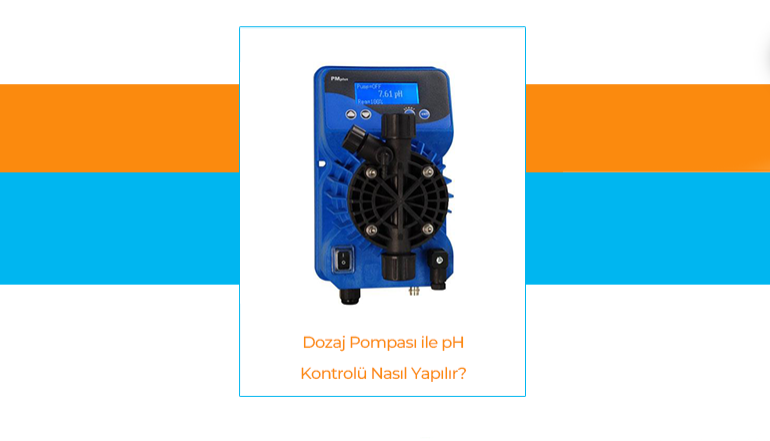
How to Control pH with a Dosing Pump?
In industrial facilities, maintaining water, process fluids, and chemical mixtures within a specific pH range is critical for product quality, system safety, and process efficiency. Disruption of pH balance can lead to decreased production quality, corrosion on equipment surfaces, deviations in chemical reactions, and inadequate treatment performance. Therefore, in many sectors, pH control is managed by automated systems instead of manual interventions.
One of the most important pieces of equipment that comes into play here is the dosing pump. Dosing pumps ensure that the pH level is maintained within the desired range by delivering acidic or basic chemicals to the system in a controlled and precise manner. Dosing pumps are widely preferred for pH control, especially in water treatment plants, chemical processes, food production lines, textile applications, and various industrial processes.
This article details how pH control is performed with a dosing pump, the components of the system, and the points to consider for correct application.
Why is pH Control So Important?
pH is a fundamental measurement that indicates the acidic or basic character of a liquid. A low value indicates that the liquid is acidic, while a high value indicates that it is basic. Maintaining the ideal pH range is necessary in many industrial processes because even small changes in pH levels can have significant effects on the process.
Incorrect pH levels can lead to the following problems:
- Decreased chemical reaction efficiency
- Deterioration of product quality
- Corrosion in pipelines and equipment
- Poor performance in treatment systems
- Increased operating costs
- Imbalance in chemical consumption
Therefore, pH control is not just a measurement task, but also a management process that directly affects process safety and operational sustainability.
How Does a Dosing Pump Work in pH Control?
pH control with a dosing pump is based on the principle of measurement and intervention. The pH sensor in the system measures the instantaneous pH value of the liquid. This data is transmitted to the control panel or automation system. When the measured value falls outside the previously determined target pH range, the dosing pump activates and delivers the necessary chemical to the system. For example:
- If the pH value is too low, i.e., the environment is too acidic, a basic chemical is dosed.
- If the pH value is too high, i.e., the environment is too basic, an acidic chemical is dosed.
This process can be performed continuously or intermittently. Depending on the system design, the dosage amount can be adjusted with a constant flow rate or proportional control logic. In advanced applications, the pump provides much more precise control by automatically changing its speed according to the measured value.
What Components Does a pH Control System Consist Of?
For effective pH control with a dosing pump, the system must consist of several basic pieces of equipment. A pump alone is often insufficient. For healthy control, all components must work in harmony.
1. pH Sensor or Probe
This equipment continuously measures the pH value of the liquid. It is the most important data source of the system. The higher the sensor quality, the more successful the control accuracy.
2. Control Device
It interprets the data from the sensor and gives commands to the dosing pump. The target pH value is determined via this panel. In some systems, PLC or automation infrastructure can also be used.
3. Dosing Pump
It transfers the acid or base chemical to the line in the desired amount. The flow rate, pressure, and body material of the pump should be selected to suit the chemical to be used.
4. Chemical Tank
This is the tank where the chemical to be dosed is stored. It should have a suitable material structure according to the type of chemical.
5. Injection Valve and Line Accessories
It ensures that the chemical is delivered to the system safely and in a controlled manner. Backflow prevention equipment, pulsation dampers, and safety valves also play an important role in the system.
How to Control pH with a Dosing Pump Step-by-Step?
Accurate pH control requires more than just selecting the equipment. The application must be planned and carried out in accordance with technical requirements.
Determining the Target pH Range
First, the ideal pH range required by the process must be clearly defined. This value may vary for each sector and each fluid.
Selecting the Appropriate Chemical
Acidic chemicals are used to lower pH, and basic chemicals to raise it. The concentration of the chemical to be used and its compatibility with the process must be considered.
Calculating the Dosing Pump Capacity
The appropriate pump capacity is determined by considering the system flow rate, line pressure, chemical requirement, and control accuracy.
Calibrating Sensors and Control Equipment
Regular calibration of sensors is necessary for accurate pH measurement. Otherwise, the system may dose the wrong chemical.
Determining the Dosing Point
The point at which the chemical is introduced into the system should be chosen so that the mixture is homogeneous. The correct dosing point directly affects the success of pH control.
System Testing and Optimization
After the initial installation, system performance should be monitored, and dosage settings should be optimized if necessary. Situations such as sudden pH fluctuations, sensor delays, or chemical concentration are evaluated at this stage.
Which Dosing Pump Should Be Preferred for pH Control?
The dosing pump to be used in pH control applications should be selected according to the operating conditions of the system. The same pump type may not be suitable for every application.
The most preferred options are diaphragm dosing pumps. The main reason for this is that these pumps have high chemical resistance and can perform precise dosing.
The following criteria should be considered when selecting a pump:
- Acidic or basic nature of the chemical to be used
- Desired flow rate
- System pressure
- Control accuracy
- Need for continuous or intermittent operation
- Manual, digital, or automatic control requirement
Especially in systems working with aggressive chemicals, the pump body, diaphragm structure, and seal materials are of great importance. Incorrect material selection can lead to deformation and failures in a short time.
Advantages of Automatic pH Control with Dosing Pumps
Manual chemical addition methods are often insufficient and risky in industrial processes. Automatic pH control with dosing pumps offers a safer, more precise, and more sustainable solution.
The main advantages are:
- Provides continuous and precise pH balance
- Optimizes chemical consumption
- Reduces human error
- Increases process efficiency
- Maintains product quality
- Extends equipment life
- Helps reduce operating costs
Automatic control systems, especially in wastewater treatment and production facilities, greatly contribute to maintaining process stability. This supports both the preservation of quality standards and operational continuity.
Most Common Mistakes in pH Control
pH control systems installed with dosing pumps may not deliver the expected performance if not properly designed. Some of the most common mistakes encountered in the field are:
- Incorrect selection of pump capacity
- Use of pump material unsuitable for the chemical
- Neglecting sensor calibration
- Incorrect determination of the dosing point
- Ignoring mixing time
- Failure to optimize the system against sudden pH changes
- Neglecting periodic maintenance
These types of mistakes not only disrupt pH balance but can also lead to unnecessary chemical consumption and equipment problems. Therefore, it is important to obtain expert support during both the installation and operation phases.
In Which Sectors is pH Control with Dosing Pumps Used?
pH control with dosing pumps has critical application areas in many sectors. These systems have become indispensable, especially in processes where chemical balance directly affects production quality.
Common areas of use include:
- Water and wastewater treatment plants
- Food and beverage production facilities
- Chemical industry
- Textile industry
- Pharmaceutical production lines
- Paper and pulp industry
- Metal surface treatment processes
- Energy and boiler water systems
Since each sector requires a different pH range and uses different types of chemicals, the system design must be customized accordingly.
pH control with dosing pumps is an extremely effective method for ensuring reliable and precise chemical management in industrial processes. With the right equipment selection, appropriate chemical use, precise measurement systems, and regular maintenance, pH levels can be kept under stable control.
Automatic pH control systems provide significant advantages, especially in applications where process quality, equipment safety, and chemical efficiency are important. The most critical issue here is determining the appropriate dosing pump for the system and designing all components to work together harmoniously.
A properly planned pH control system supports not only the current process performance but also the long-term efficiency and sustainability of the business.