- sisdoz@sisdoz.com.tr
- TR

Blog
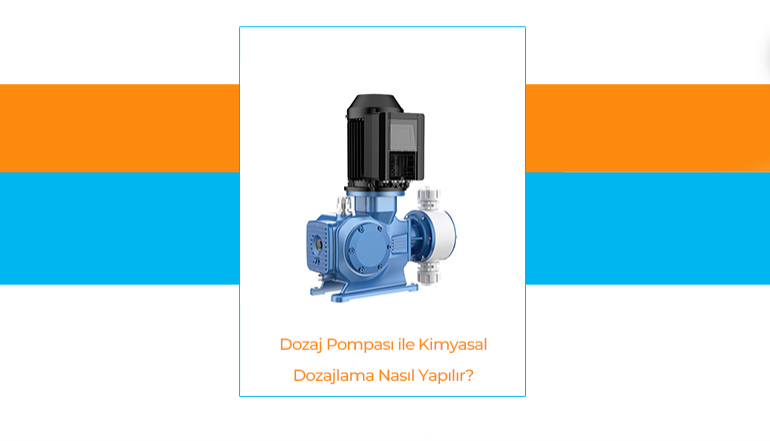
How to Perform Chemical Dosing with a Dosing Pump?
In industrial processes, it is crucial to deliver the correct amount of chemicals to the system in a controlled manner. Dosing pumps, used in many areas from water treatment plants to food production lines, from the chemical industry to the energy sector, are designed to perform chemical dosing precisely and safely.
Incorrect chemical dosing can reduce process efficiency, damage equipment, and increase operating costs. Therefore, dosing pumps must be selected, installed, and adjusted correctly.
What is Chemical Dosing?
Chemical dosing is the process of adding a specific chemical to a fluid or system in a controlled and measured manner. This process is usually carried out through automated systems.
The main purpose of chemical dosing is:
• To ensure process control
• To optimize chemical consumption
• To increase system efficiency
• To create safe working conditions
Especially in water treatment systems, processes such as pH regulation, chlorination, or coagulant addition are performed with dosing pumps.
What is a Dosing Pump?
Dosing pumps are special pumps that can transfer liquid chemicals to a system at a specific flow rate and under precise control. Unlike standard pumps, dosing pumps can provide high accuracy even at very low flow rates.
The main features of dosing pumps are:
• Precise flow rate control
• Adjustable dosing capacity
• Chemical-resistant materials
• Compatibility with automation systems
Thanks to these features, stable and reliable chemical dosing is ensured in processes.
Chemical Dosing Process with a Dosing Pump
The chemical dosing process is carried out in specific stages. If the correct installation and adjustment are not made, the system will not give the desired performance.
1. Determining the Chemical to be Dosed
The first step is to determine the type and quantity of chemical to be added to the system. Factors considered at this stage include:
• Chemical concentration
• Concentration value
• pH value
• System flow rate
• Process requirements
Accurate calculation is critical for selecting the correct capacity dosing pump.
2. Dosing Pump Selection
The appropriate pump type should be selected according to the chemical's properties. The most commonly used dosing pump types are:
• Diaphragm dosing pumps
• Piston dosing pumps
• Peristaltic dosing Pumps
The aggressiveness, viscosity, and process pressure of the chemical play a decisive role in pump selection.
3. Dosing System Installation
A dosing pump does not operate independently. It is usually part of a chemical dosing system. This system consists of the following components:
• Chemical tank
• Dosing pump
• Suction line
• Injection line
• Check valve and filters
• Pulsation damper
• Pressure relief valve
• Pressure loading valve
• Calibration cylinder
• Shut-off valves
• Pressure gauge or sensor
• Temperature gauge or sensor
• Control and automation panel
It is important that the lines are connected correctly during installation and that the system is free of air.
4. Flow Rate Adjustment and Calibration
Dosing pumps generally operate with manual or automatic flow rate adjustment. Calibration must be performed before the system is commissioned. The calibration process includes the following steps:
1. Running the pump for a specific period of time
2. Measuring the amount of liquid output
3. Adjusting the flow rate accordingly
This process increases the accuracy of the dosing.
5. Automation and Sensor Integration
Sensors and automation systems play an important role in modern dosing systems. For example:
• pH sensor
• ORP sensor
• flow meter
Based on the data from these sensors, the dosing pump can operate automatically. This optimizes chemical consumption and minimizes human error.
Considerations in Chemical Dosing
Some important technical points should be considered when using a dosing pump.
Correct Capacity Selection
The pump's capacity should be suitable for the process requirements. Excessively large or small capacities reduce efficiency.
Chemical Compatibility
The pump body, materials in contact with the fluid, and diaphragm material must be resistant to the chemical used. Otherwise, the equipment may be damaged.
Regular Maintenance
Dosing pumps should be checked at specific intervals. The following parts should be checked in particular:
• diaphragm
• valves
• seals and connections
Regular maintenance extends the life of the pump.
Areas of Application of Dosing Pumps
Dosing pumps have a very wide range of industrial applications. The most common areas of use are:
• Water and wastewater treatment plants
• Chemical and petrochemical plants
• Food and beverage production
• Power plants
• Paper and textile industry
In these sectors, accurate dosing ensures the preservation of process quality.
Precision and control are of great importance in chemical dosing processes. Dosing pumps increase process efficiency and optimize chemical consumption by ensuring that chemicals are delivered to the system in the correct amount.
With the correct pump selection, appropriate system installation and regular maintenance, it is possible to obtain reliable performance from dosing systems for many years.