- sisdoz@sisdoz.com.tr
- TR

Blog
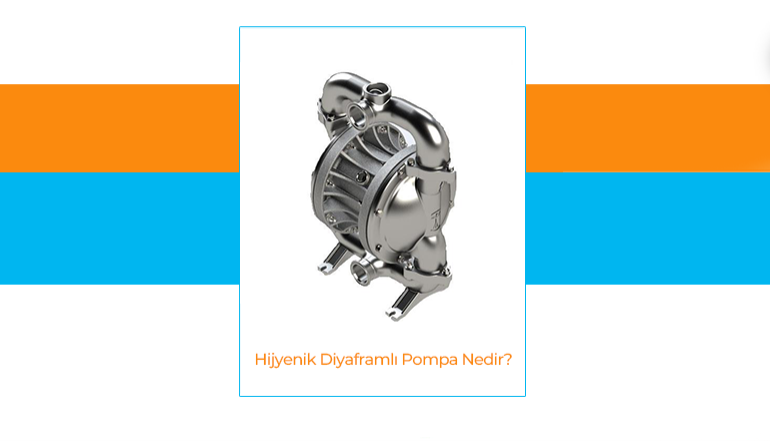
What is a Hygienic Diaphragm Pump? Where and Why is it Preferred?
Equipment used in industrial applications where hygiene is critical must meet high standards not only in performance but also in safety, cleanliness, and regulatory compliance. In this regard, hygienic diaphragm pumps are indispensable equipment for sensitive processes.
In sectors such as food, pharmaceuticals, cosmetics, and biotechnology, protecting the product's structure and preventing contact with external factors during liquid transfer is of great importance. Hygienic diaphragm pumps directly address this need thanks to their special design and operating principle.
How Does a Hygienic Diaphragm Pump Work?
Hygienic diaphragm pumps operate with the back-and-forth movement of a flexible diaphragm. This movement creates vacuum and pressure within the pump body, enabling the suction and pumping of fluid. The fluid only contacts the diaphragm and pump body without touching mechanical parts. Thanks to this structure:
- The risk of product contamination is minimized
- Sensitive and foaming-prone liquids are transported without damage
- Cleaning and sterilization processes are facilitated
Designs suitable for CIP (Clean-in-Place) and SIP (Sterilization-in-Place) processes are one of the most important factors that distinguish hygienic diaphragm pumps from classic pump types.
Advantages of Hygienic Diaphragm Pumps
Hygienic diaphragm pumps offer significant advantages not only in terms of hygiene but also in terms of process safety and efficiency.
- Product Safety: Preventing fluid contact with the external environment preserves product purity.
- Precise Transfer: Since it operates without creating shear force, sensitive liquids can be pumped safely.
- Easy Cleaning: Cleaning processes are quick thanks to smooth inner surfaces and a design that does not create dead space.
- Chemical Resistance: Thanks to different diaphragm and body materials, it is resistant to aggressive chemicals.
- Suitability for Dry Running: The pump is not damaged during short periods of dry running.
These advantages make hygienic diaphragm pumps an ideal solution for facilities where process safety is paramount.
In Which Sectors Are They Used?
Hygienic diaphragm pumps have a very wide range of applications. They are particularly preferred in sectors where hygiene standards are mandatory.
- Food and beverage production facilities
- Pharmaceutical and biotechnology industry
- Cosmetics and personal care product manufacturing
- Chemical and specialty chemical processes
- Laboratory and pilot plant applications
The liquids used in these sectors may be viscous, sensitive, contain particles, or be chemically aggressive. Hygienic diaphragm pumps are designed to adapt to these different needs.
What to Consider When Choosing a Hygienic Diaphragm Pump?
Choosing the right pump is critical for the smooth and long-lasting operation of the process. The following criteria must be evaluated when choosing a hygienic diaphragm pump:
- Viscosity and chemical composition of the fluid
- Operating pressure and flow rate requirement
- Diaphragm and casing material to be used
- Cleaning and sterilization requirements
- Compliance with international hygiene standards
An incorrectly selected pump can lead to product loss, process disruptions, and high maintenance costs.
Reliable Solution for Hygiene-Requiring Processes
Hygienic diaphragm pumps are a powerful solution in applications where product safety and process efficiency must be ensured together. They ensure the transfer of fluids without altering their structure and at high hygiene standards.
When selected correctly and used under appropriate conditions, they offer a long-lasting and reliable pump solution.