- sisdoz@sisdoz.com.tr
- TR

Blog
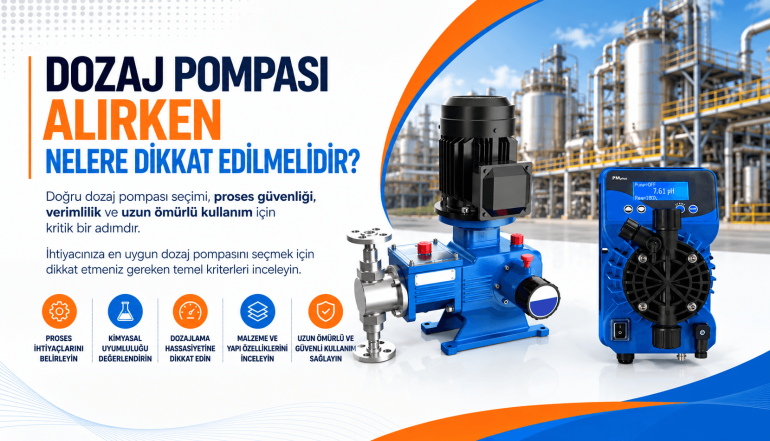
What Should Be Considered When Purchasing a Dosing Pump?
Selecting the right dosing pump involves more than just determining the required flow rate. Factors such as the properties of the chemical to be transferred, operating pressure, dosing precision, the control system to be employed, and the materials of construction must all be evaluated together. A pump that is not properly selected for the application can lead to irregular chemical dosing, equipment failure, excessive chemical consumption, and increased operating costs.
Therefore, when comparing dosing pumps, one should not focus solely on the product price or maximum capacity. The technical conditions of the process in which the pump will operate must be analyzed in detail.
What Is a Dosing Pump and What Is Its Purpose?
A dosing pump is a piece of equipment designed to transfer a specific quantity of liquid into a process in a controlled, measurable, and repeatable manner. It is typically used in applications requiring the precise dosing of chemicals, additives, disinfectants, acids, bases, and similar liquids.
Dosing pumps used in industrial facilities range from manually adjusted, constant-flow systems to advanced models capable of communicating with automation infrastructures. Key sectors utilizing these pumps include water and wastewater treatment, chemicals, food processing, energy, mining, agriculture, pharmaceuticals, and manufacturing.
How to Select the Right Dosing Pump?
When selecting a dosing pump, the minimum and maximum chemical quantities required by the process must first be determined. Subsequently, factors such as operating pressure, the physical and chemical properties of the fluid, environmental conditions, and control requirements should be evaluated.
Key information required for the correct selection includes:
- Name and concentration of the chemical to be dosed
- Required minimum and maximum flow rates
- System pressure at which the pump will operate
- Temperature, density, and viscosity of the fluid
- Corrosive or off-gassing nature of the chemical
- Length of the suction and discharge lines
- Daily operating duration of the pump
- Need for manual or automatic control
- Environmental conditions of the installation site
The Required Pump Capacity Must Be Accurately Determined
Flow rate refers to the volume of fluid a dosing pump can transfer within a specific timeframe. It is typically expressed in liters per hour or milliliters per hour. To determine the required capacity, one must calculate the amount of chemical that needs to be delivered to the process within an hour or a day.
For instance, if a facility plans to use 120 liters of chemical per day with the pump operating for 12 hours daily, the average requirement would be 10 liters per hour. However, rather than running the pump continuously at maximum capacity, an appropriate operating range should be maintained to allow for adjustments.
Dosing pumps that are oversized may operate unstably at the lower end of their adjustment range. Conversely, a pump with insufficient capacity cannot deliver the target amount of chemical. Therefore, the selection should be based not only on the maximum flow rate but also on the capacity range within which the pump operates efficiently and precisely.
Operating Pressure Must Be Considered
The backpressure in the line where the pump delivers the fluid is one of the most critical criteria in the selection process. The pressure capability of the dosing pump must exceed the actual operating pressure of the system. Selections made without accurately calculating line pressure can lead to issues such as flow rate loss, irregular dosing, or the pump's inability to inject the fluid into the line.
Pipe diameter, line length, elevation differences, fittings, valves, and the injection point can all influence system pressure. Particularly with long pipelines, relying solely on the facility's nominal pressure rating is insufficient. Pressure losses along the line must also be taken into account.
Chemical Compatibility Must Be Verified
The fluid to be dosed must be chemically compatible with the pump housing, diaphragm, seals, valves, and fittings. Acids, bases, oxidizing agents, and solvents can have varying effects on different materials.
Materials such as PVC, PP, PVDF, PTFE, and stainless steel may be used in dosing pumps, depending on the application. Selecting the wrong material can result in swelling, cracking, deformation, leakage, and premature wear of components. This situation not only shortens the pump's service life but can also pose a safety risk to personnel and the facility.
The chemical's trade name alone may not be sufficient. When making a selection, the product's concentration, operating temperature, and other components within the mixture must also be specified.
Liquid Viscosity and Density Must Be Evaluated
High-viscosity liquids create greater resistance within the pump and piping compared to water-like fluids. Therefore, a standard dosing pump may not be sufficient for dense or viscous chemicals.
High-viscosity liquids may require a lower stroke rate, a suitable valve design, a larger pipe diameter, or a specialized pump head. Liquid density can also affect motor load and the actual dosing quantity. It is essential to verify the reference fluid and conditions under which the manufacturer's capacity ratings were measured.
Dosing Precision Must Be Suitable for the Application
Not every process requires the same level of dosing precision. While minor flow rate fluctuations may be acceptable in simple chemical transfer applications, processes such as pH control, disinfection, laboratory operations, and recipe-based production lines often require much more precise dosing.
One should examine not only the pump's maximum catalog capacity but also its repeatability, adjustable flow range, and performance at low capacities. It is particularly important to verify that the pump operates stably at minimum flow rates when handling small quantities of chemicals.
Pump Technology Should Be Selected Based on Requirements
Dosing pumps are categorized according to their operating principles. The most suitable technology should be determined based on fluid properties and process conditions.
Electromagnetic Diaphragm Dosing Pumps
Thanks to their compact design and precise adjustment capabilities, these pumps are widely used in low- to medium-flow applications. They are often preferred for water treatment, disinfection, and chemical conditioning systems.
Motor-Driven Diaphragm Dosing Pumps
These pumps are suitable for processes requiring higher flow rates and capable of withstanding demanding operating conditions. They offer a durable and controllable solution for continuous industrial systems.
Piston Dosing Pumps
These pumps are suitable for high-pressure applications and the handling of high-viscosity fluids. However, careful consideration must be given to the maintenance of sealing components and their compatibility with the chemical being transferred.
Peristaltic Dosing Pumps
Since the fluid comes into contact only with the hose, these pumps offer advantages when handling corrosive, particle-laden, or gas-evolving liquids. The chemical compatibility and replacement interval of the hose used in these systems are critical factors.
Determining the Need for Manual or Automatic Control
Manual flow rate adjustment may suffice for applications requiring a constant dosage of chemicals. However, variable process conditions may necessitate connecting the pump to automatic control systems.
For dosing pumps integrated into automation systems, the following control and communication options can be considered:
- Flow rate control via analog signal
- Proportional dosing via pulse signal
- Connection to a flow meter or totalizer
- Control via pH, ORP, or conductivity sensors
- Level switch connection
- Remote start/stop capability
- Fault and low-level alarms
- Communication with a PLC or central automation system
Evaluating connectivity options that might be needed in the future—even if not utilized during the initial installation—can reduce the likelihood of needing to replace the pump later.
Suction Conditions and Installation Point Must Be Evaluated
The distance between the dosing pump and the chemical tank, the suction lift, and the piping layout directly affect performance. It is recommended to position the pump as close to the chemical tank as possible and to keep the suction line short.
Gas-evolving chemicals, long suction lines, or high suction lifts can cause the pump to air-lock and reduce capacity. In such applications, options such as a degassing pump head, appropriate suction equipment, or installation below the tank level should be considered.
Auxiliary Equipment Should Not Be Overlooked
Selecting the right auxiliary equipment for the system is just as important as choosing the correct pump. Depending on the application, components such as suction filters, injection valves, back-pressure valves, pressure relief valves, pulsation dampeners, calibration columns, and flow monitoring equipment may be used.
These components enhance dosing stability, protect the pump against overpressure, and contribute to safer system operation. Focusing solely on the pump price while neglecting necessary line equipment can lead to higher maintenance and repair costs in the long run.
Maintenance and Spare Parts Availability Should Be Investigated
Parts such as diaphragms, seals, valves, and hoses in dosing pumps can wear out over time depending on operating conditions. Therefore, factors such as spare part lead times, ease of maintenance, and technical support availability should be investigated prior to purchase.
A pump that is easy to maintain and has readily available spare parts reduces unplanned downtime. Conversely, a product with a low initial purchase price but expensive or hard-to-find consumables may result in higher total costs over its service life.
Dosing Pump Price Should Not Be the Sole Decision Criterion
Dosing pump prices vary based on capacity, operating pressure, casing material, control features, and the technology employed. While the initial purchase price is significant, factors such as energy consumption, maintenance requirements, spare part costs, and service life must also be considered.
A high-quality dosing pump selected to suit the specific application helps control chemical consumption and ensures a more stable process. Therefore, focusing on the total cost of ownership—rather than simply opting for the lowest-priced product—is the more prudent approach.
Questions to Ask Before Purchasing a Dosing Pump
- Which chemical will the pump dose, and at what concentration?
- What are the required minimum and maximum flow rates?
- What is the system's actual operating pressure in bar?
- What are the temperature, density, and viscosity of the chemical?
- How many hours per day will the pump operate?
- Will manual adjustment or automatic control be used?
- Are the pump materials compatible with the chemical?
- Is the installation area subject to humidity, dust, or an explosive atmosphere?
- Are the necessary auxiliary components included with the product?
- Is technical service and spare part support available?
Frequently Asked Questions
What Is the Most Important Criterion When Selecting a Dosing Pump?
It is not correct to base the selection on a single criterion. Flow rate, pressure, chemical compatibility, and dosing precision must be evaluated together. However, ensuring that the pump materials are compatible with the chemical to be dosed is a priority for safe operation.
Is It Advantageous to Select a Dosing Pump That Is Larger Than Necessary?
Not always. If an oversized pump is operated at a very low capacity, precision and dosing stability may decrease. The pump should be selected so that the required flow rate falls within an appropriate operating range.
Can the Same Dosing Pump Be Used for Every Chemical?
No. Chemicals differ in terms of corrosiveness, viscosity, temperature, and tendency to off-gas. The pump type and the materials in contact with the fluid must be determined based on the specific properties of the chemical in question.
Can a Dosing Pump Be Connected to an Automation System?
Models with appropriate control features can operate in conjunction with flow meters, counters, pH sensors, level switches, PLCs, and central automation systems. The necessary signal and communication capabilities should be determined prior to purchase.
The Importance of Choosing the Right Dosing Pump
When purchasing a dosing pump, factors such as capacity, pressure, chemical compatibility, precision, control options, and maintenance requirements should be evaluated holistically. A correctly selected pump helps keep chemical consumption under control, maintains process quality, and ensures safe system operation.
Especially in industrial applications, it is important to share process data with experts before selecting a product. This allows for the creation of a dosing system that not only meets current needs but also aligns with the facility's operating conditions and future automation requirements.